by The Local Insider
Share
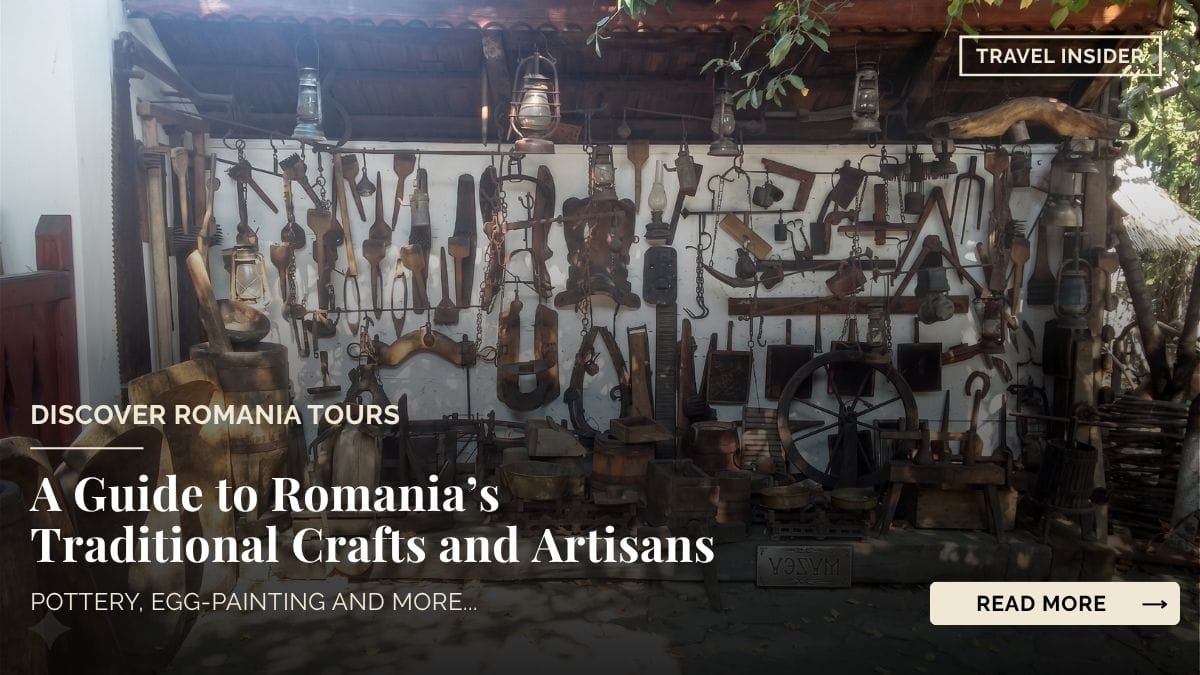
Romania is famous for its soaring peaks and medieval fortresses. However, the true soul of the country resides in the hands of its people. Away from the well-trodden paths of Dracula’s Castle lies a world of “living heritage.” Specifically, this is a network of village workshops where centuries-old traditions are still a way of life.
For travelers seeking a deeper connection, exploring traditional crafts in Romania offers a window into a unique rural philosophy. Consequently, you will discover a world of sustainability, patience, and beauty. Here is a guide to the most iconic artisans you can encounter across the regions.
The Woodcarvers of Maramureș: Gates to the Soul
In the northern region of Maramureș, wood is the primary language. The region is world-renowned for its UNESCO wooden churches. Nevertheless, the artistry actually begins at the entrance to the home.
Local artisans transform Maramureș Wooden Gates into intricate masterpieces of symbolism. As you walk through villages like Ieud, look for the “rope” motif. This represents the link between heaven and earth. Similarly, the “sun” symbol represents life and divinity. You can visit a local woodcarver’s workshop to see this process firsthand. These masters use only hand tools to turn a single oak log into a monument of family pride.
The Black Pottery of Marginea: Fire and Smoke
In contrast to the colorful Horezu style, Bucovina offers something mysterious. Near the painted monasteries, the village of Marginea produces Black Pottery. Artisans here use a technique dating back to the ancient Geto-Dacians.
The deep charcoal color does not come from paint. Instead, the masters use a unique “oxygen-starved” firing process. They burn the clay in closed kilns to force smoke into the pores. As a result, the ceramic gains a sleek, metallic finish. Watching a master potter shape the wet clay on a foot-powered wheel is a hypnotic experience.
The Weaver’s Loom: Patterns of Identity
Throughout rural Transylvania and Oltenia, the loom provides the heartbeat of the home. Romanian traditional textiles are more than just fabric. In fact, they act as a coded map of the wearer’s life.
An authentic IA (Romanian blouse) can take months to hand-stitch. Every region has its own specific palette. For instance, Bucovina favors gold and silver threads. This mirrors the richness of the local monasteries. Meanwhile, Sibiu is famous for minimalist black-and-white patterns. These designs reflect the elegance of the shepherd culture.
The Egg Painters: Miniature Masterpieces
Perhaps the most delicate craft is the art of Egg Painting in Bucovina. Artisans use a “chisăviță,” which is a tiny wooden tool with a metal tip. They apply layers of melted beeswax and dye to create complex patterns.
Each egg tells a specific story. For example, a straight line represents life, while a square represents wisdom. These are not merely decorations. On the contrary, locals consider them symbols of luck and protection. Many workshops welcome visitors to try this meditative art.
The Ceramics of Horezu: The Symbol of the Rooster
While some crafts focus on wood, others celebrate the earth. Horezu pottery is a perfect example and serves as a symbol of color and light. Located in Vâlcea County, this craft is now a UNESCO Intangible Cultural Heritage treasure.
Horezu artisans are famous for their unique “Horezu Ivory” background. Moreover, they use traditional tools like an ox horn to apply fine lines of color. The most famous motif is the Horezu Rooster. This bird represents the victory of light over darkness. Furthermore, you will see symbols like the “Tree of Life” or “Spiders” which represent hard work. Visiting Olari Street in Horezu feels like walking through a living gallery.
Why Meet the Artisans?
In an era of mass production, visiting a Romanian artisan is a radical act of slow travel. It is an opportunity to hear stories that history books often miss. You will learn about village lore and the resilience of rural life.
When you join a guided tour, you are not just a spectator. Instead, you help ensure these ancient skills remain viable for the next generation.
Planning your journey?
Many of our regional tours through Maramureș and Bucovina include private visits to these workshops. Whether it’s sitting down for a coffee with a woodcarver or learning to paint your first egg, these are the moments that turn a vacation into a lifelong memory.