Bucharest Private Tours
Discover Bucharest Private Tours:
From the Palace of Parliament to the Bohemian Soul of Calea Victoriei & the Old Town (2026 Guide)
Experience Bucharest private tours in a city where communist-era grandeur, Belle Époque elegance, and a fiercely creative contemporary culture collide in the most unexpected ways. While many travelers arrive braced for a grey post-Soviet capital, they quickly discover that the “real” Bucharest is far more layered and alive. Specifically, in 2026, this city is emerging as one of Europe’s most underrated and genuinely surprising urban destinations.
Exploring the Real Bucharest
Furthermore, you can imagine standing beneath the soaring dome of the Romanian Athenaeum or discovering the hidden courtyards tucked behind the grand facades of Calea Victoriei. Additionally, you might trace the intimate alleyways of the Jewish Quarter or step inside Stavropoleos Church, a baroque jewel hidden in plain sight. From the sheer monumental scale of the Palace of Parliament to the lived-in warmth of a traditional ciumă bookshop café in the Old Town, every block reveals a different century of Bucharest’s restless reinvention.
Dive in
For those seeking depth, Bucharest offers communist history that no museum can fully capture without a local voice to decode it. In addition, it features one of Eastern Europe’s most exciting food scenes, interwar mansions that earned the city its once-famous nickname “Little Paris,” and a nightlife culture consistently ranked among the continent’s best. Whether you spend an afternoon in the open-air Village Museum or follow the ghost of Ceaușescu’s vision through the Civic Centre, the experience defies every preconception. Ultimately, as your local experts, we reveal the stories and hidden layers that no guidebook ever quite manages to reach.
Bucharest Private Tours
Discover Bucharest Private Tours:
From the Palace of Parliament to the Bohemian Soul of Calea Victoriei & the Old Town (2026 Guide)
Experience Bucharest private tours in a city where communist-era grandeur, Belle Époque elegance, and a fiercely creative contemporary culture collide in the most unexpected ways. While many travelers arrive braced for a grey post-Soviet capital, they quickly discover that the “real” Bucharest is far more layered and alive. Specifically, in 2026, this city is emerging as one of Europe’s most underrated and genuinely surprising urban destinations.
Exploring the Real Bucharest
Furthermore, you can imagine standing beneath the soaring dome of the Romanian Athenaeum or discovering the hidden courtyards tucked behind the grand facades of Calea Victoriei. Additionally, you might trace the intimate alleyways of the Jewish Quarter or step inside Stavropoleos Church, a baroque jewel hidden in plain sight. From the sheer monumental scale of the Palace of Parliament to the lived-in warmth of a traditional ciumă bookshop café in the Old Town, every block reveals a different century of Bucharest’s restless reinvention.
Dive in
For those seeking depth, Bucharest offers communist history that no museum can fully capture without a local voice to decode it. In addition, it features one of Eastern Europe’s most exciting food scenes, interwar mansions that earned the city its once-famous nickname “Little Paris,” and a nightlife culture consistently ranked among the continent’s best. Whether you spend an afternoon in the open-air Village Museum or follow the ghost of Ceaușescu’s vision through the Civic Centre, the experience defies every preconception. Ultimately, as your local experts, we reveal the stories and hidden layers that no guidebook ever quite manages to reach.
Bucharest At a Glance (2026)
Bucharest is one of Europe’s most misread capitals — communist monuments shoulder to shoulder with Art Nouveau palaces, a café culture to rival Vienna, and a food and creative scene entirely its own. This is what you need to know before you arrive.
Category | Essential Information for 2026 – Bucharest Private Tours |
|---|---|
Best Time to Visit | April–May & September–October — ideal weather, parks in bloom, pleasant evenings for Old Town walks. June–July — outdoor terraces at their peak, George Enescu Festival every odd year. December — Christmas market at Piața Constituției, ice rink at Herăstrău Park, festive lights along Calea Victoriei. |
Nearest Airports | AirportsHenri Coandă International (OTP) — Bucharest’s main gateway and Romania’s most connected hub, including direct flights from New York (JFK) and other North American cities. Băneasa (BBU) — smaller city-side airport, mainly charter and low-cost. Bucharest is also the ideal anchor for open-jaw Romania itineraries — fly in to OTP, out from Cluj — covering both the capital and Transylvania in one trip. |
Entry Requirements | EU/Schengen member since 2024 — no border checks for EU citizens. ETIAS Authorization — an online travel permit (€20) is expected for US, UK, CA & AU visitors; check current status before booking as the rollout date has shifted. |
Currency | Romanian Leu (RON). Cards widely accepted throughout the city, including most restaurants, museums, and hotels. Cash remains useful for local markets, smaller family-run spots, and tips. |
Top Landmarks | Palace of Parliament — the world’s heaviest building and the defining monument of Ceaușescu’s ambition. Romanian Athenaeum — the city’s cultural heart, one of Europe’s most beautiful concert halls. Calea Victoriei — the grand interwar boulevard lined with palaces, museums, and hidden passageways. Jewish Quarter & Stavropoleos Church — compact, deeply layered, and best understood with a guide. |
Getting Around | Bucharest has a functioning metro and taxis, but the city’s most compelling stories — communist-era underground networks, hidden courtyards, interwar mansions closed to the general public — are only accessible with a private guide who knows where to look and what questions to ask. |
Connectivity | Free Wi-Fi on board all our private vehicles throughout your tour. For broader connectivity, we can arrange a local Romanian eSIM before your arrival — a fraction of the cost of international roaming plans, with Romania’s exceptional network speeds from day one. |
Bucharest At a Glance (2026)
Bucharest is one of Europe’s most misread capitals — communist monuments shoulder to shoulder with Art Nouveau palaces, a café culture to rival Vienna, and a food and creative scene entirely its own. This is what you need to know before you arrive.
June–July: Outdoor terraces at their peak; George Enescu Festival every odd year.
December: Christmas market at Piața Constituției, ice rink at Herăstrău Park, festive lights along Calea Victoriei.
Băneasa (BBU): Smaller city-side airport, mainly charter and low-cost.
Open-jaw itineraries work very well — fly into OTP, out from Cluj, covering Bucharest and Transylvania in one trip.
ETIAS Authorization: An online travel permit (€7) is expected for US, UK, CA & AU visitors; check current status before booking as the rollout date has shifted.
Note: Cash remains useful for local markets, smaller family-run spots, and tips.
Romanian Athenaeum: The city's cultural heart, one of Europe's most beautiful concert halls.
Calea Victoriei: The grand interwar boulevard lined with palaces, museums, and hidden passageways.
Jewish Quarter & Stavropoleos Church: Compact, deeply layered, and best understood with a guide.
eSIM: We can arrange a local Romanian eSIM before your arrival — a fraction of the cost of international roaming with exceptional 5G speeds from day one.
Top Places to Visit in Bucharest
Bucharest rewards the curious. These are the six places where the city’s contradictions — communist and royal, Byzantine and Belle Époque, scarred and quietly beautiful — come most sharply into focus.
Village Museum: Romania Under One Sky
270 authentic homes, churches, and mills — relocated here from every corner of the country.Village Museum Dimitrie Gusti
2026 Update: The museum has expanded its living craft programme, with resident artisans demonstrating traditional techniques throughout the season — a detail that transforms a walkthrough into a genuine encounter.
Don’t Miss: Few museums anywhere stop visitors in their tracks the way this one does. Over 270 authentic farmhouses, mills, churches, and workshops — physically relocated from every corner of Romania and reassembled exactly as they stood. No reconstructions, no replicas. In quieter months, you may have entire sections entirely to yourself.
Old Town: Six Centuries Beneath the Cobblestones
A Byzantine church behind a bar. A medieval royal court beneath your feet. And some of the best terraces in Eastern Europe above it all.Old Town
2026 Update: Caru’ cu Bere — Bucharest’s legendary beer hall dating to 1879 and a historical monument in its own right — remains the single best place to experience Old Town across both centuries at once.
Don’t Miss: Arrive on your own and you’ll find a pleasant pedestrian zone of restaurant terraces and cobblestoned streets. Arrive with a local guide and you’ll find a 16th-century merchant quarter still legible beneath the surface — the ruins of Vlad the Impaler’s actual court beneath your feet, and Stavropoleos Church, a baroque jewel hiding in plain sight behind a bar on Covaci Street.
Revolution Square: Where 1989 Became Real
The balcony. The crowd. The shots. All of it still visible — if you know where to look.Revolution Square
2026 Update: The Romanian Athenaeum celebrated its 135th anniversary in 2023 and continues its prestigious concert season — worth timing your visit around if classical music is on your radar.
Don’t Miss: On the 21st of December 1989, a crowd gathered here and history changed. The balcony from which Ceaușescu gave his last public speech still stands — you can look up at it. No other square in Bucharest carries this density of conflicting stories — communist power, royal legacy, violent revolution, and uneasy memory — all within a few hundred metres of each other.
Calea Victoriei: Bucharest's Most Elegant Mile
Belle Époque palaces, hidden courtyards, and the boulevard that earned Bucharest its famous nickname.Calea Victoriei
2026 Update: The Museum of Art Collections, housed in a former aristocratic residence along the boulevard, remains one of Bucharest’s most undervisited gems — and one of our favourite stops on this stretch.
Don’t Miss: Bucharest’s oldest and grandest boulevard, lined with Belle Époque palaces, neoclassical ministry buildings, and the kind of facades that stop architects mid-sentence. What makes it extraordinary on a private tour is what’s hidden behind street level — gated courtyards, interwar mansions with original tilework, and the stories of the families who built all of this between 1880 and 1940, and what happened to them afterward.
Jewish Quarter: A Community Etched in Stone
Over 100,000 people called this neighbourhood home. The buildings still remember.Jewish Quarter
2026 Update: The Choral Synagogue, one of the most beautiful in Southeast Europe, continues its careful restoration programme, with interior visits available for small private groups.
Don’t Miss: Bucharest was once home to over 100,000 Jewish residents — one of Europe’s largest communities. The Great Synagogue, the Choral Synagogue, and the Jewish History Museum are the visible anchors. The real experience is walking the streets between them with someone who can explain what was here, what was lost, and what quietly survived. For many North American visitors, this is the most personally affecting stop on any Bucharest itinerary.
Carol Park: The Park That Surprises Everyone
1906 neoclassical design, a hilltop panorama, and more layers of history than any park has a right to carry.Carol Park
2026 Update: One of the few large green spaces in central Bucharest largely undiscovered by group tourism — which is precisely what makes it worth your time.
Don’t Miss: Designed in 1906, Carol Park sits on a hillside south of the centre with a neoclassical layout, a panoramic terrace, and an atmosphere genuinely removed from the city around it. The Watchmen’s Tower stands at the top; the communist-era Mausoleum adds a layer of political history that makes this far more than a scenic walk. Come in the morning, when the light is soft and the chess players have already claimed their tables.
Top Places to Visit in Bucharest
Bucharest rewards the curious. These are the six places where the city’s contradictions — communist and royal, Byzantine and Belle Époque, scarred and quietly beautiful — come most sharply into focus.
Village Museum: Romania Under One Sky
270 authentic homes, churches, and mills — relocated here from every corner of the country.Village Museum Dimitrie Gusti
2026 Update: The museum has expanded its living craft programme, with resident artisans demonstrating traditional techniques throughout the season — a detail that transforms a walkthrough into a genuine encounter.
Don’t Miss: Few museums anywhere stop visitors in their tracks the way this one does. Over 270 authentic farmhouses, mills, churches, and workshops — physically relocated from every corner of Romania and reassembled exactly as they stood. No reconstructions, no replicas. In quieter months, you may have entire sections entirely to yourself.
Old Town: Six Centuries Beneath the Cobblestones
A Byzantine church behind a bar. A medieval royal court beneath your feet. And some of the best terraces in Eastern Europe above it all.Old Town
2026 Update: Caru’ cu Bere — Bucharest’s legendary beer hall dating to 1879 and a historical monument in its own right — remains the single best place to experience Old Town across both centuries at once.
Don’t Miss: Arrive on your own and you’ll find a pleasant pedestrian zone of restaurant terraces and cobblestoned streets. Arrive with a local guide and you’ll find a 16th-century merchant quarter still legible beneath the surface — the ruins of Vlad the Impaler’s actual court beneath your feet, and Stavropoleos Church, a baroque jewel hiding in plain sight behind a bar on Covaci Street.
Revolution Square: Where 1989 Became Real
The balcony. The crowd. The shots. All of it still visible — if you know where to look.Revolution Square
2026 Update: The Romanian Athenaeum celebrated its 135th anniversary in 2023 and continues its prestigious concert season — worth timing your visit around if classical music is on your radar.
Don’t Miss: On 21 December 1989, a crowd gathered here and history changed. The balcony from which Ceaușescu gave his last public speech still stands — you can look up at it. So does the Royal Palace, now the National Art Museum, and the Romanian Athenaeum directly across the boulevard. No other square in Bucharest carries this density of conflicting stories — communist power, royal legacy, violent revolution, and uneasy memory — all within a few hundred metres of each other.
Calea Victoriei: Bucharest's Most Elegant Mile
Belle Époque palaces, hidden courtyards, and the boulevard that earned Bucharest its famous nickname.Calea Victoriei
2026 Update: The Museum of Art Collections, housed in a former aristocratic residence along the boulevard, remains one of Bucharest’s most undervisited gems — and one of our favourite stops on this stretch.
Don’t Miss: Bucharest’s oldest and grandest boulevard, lined with Belle Époque palaces, neoclassical ministry buildings, and the kind of facades that stop architects mid-sentence. What makes it extraordinary on a private tour is what’s hidden behind street level — gated courtyards, interwar mansions with original tilework, and the stories of the families who built all of this between 1880 and 1940, and what happened to them afterward.
Jewish Quarter: A Community Etched in Stone
Over 100,000 people called this neighbourhood home. The buildings still remember.Jewish Quarter
2026 Update: The Choral Synagogue, one of the most beautiful in Southeast Europe, continues its careful restoration programme, with interior visits available for small private groups.
Don’t Miss: Bucharest was once home to over 100,000 Jewish residents — one of Europe’s largest communities. The Great Synagogue, the Choral Synagogue, and the Jewish History Museum are the visible anchors. The real experience is walking the streets between them with someone who can explain what was here, what was lost, and what quietly survived. For many North American visitors, this is the most personally affecting stop on any Bucharest itinerary.
Carol Park: The Park That Surprises Everyone
1906 neoclassical design, a hilltop panorama, and more layers of history than any park has a right to carry.Carol Park
2026 Update: One of the few large green spaces in central Bucharest largely undiscovered by group tourism — which is precisely what makes it worth your time.
Don’t Miss: Designed in 1906, Carol Park sits on a hillside south of the centre with a neoclassical layout, a panoramic terrace, and an atmosphere genuinely removed from the city around it. The Watchmen’s Tower stands at the top; the communist-era Mausoleum adds a layer of political history that makes this far more than a scenic walk. Come in the morning, when the light is soft and the chess players have already claimed their tables.
Must-See Landmarks in Bucharest
Which one of these places is already on your Bucharest Private Tour bucket list?
Palace of Parliament: The Weight of an Empire of One
The second largest administrative building on earth, built on the bones of an entire neighborhood.
2026 Insider Tip: Public entry covers a fraction of the 1,100 rooms. On a private tour we access restricted wings and lesser-known vantage points — and more importantly, we give the building the political and human context that makes it genuinely comprehensible rather than just overwhelmingly large.
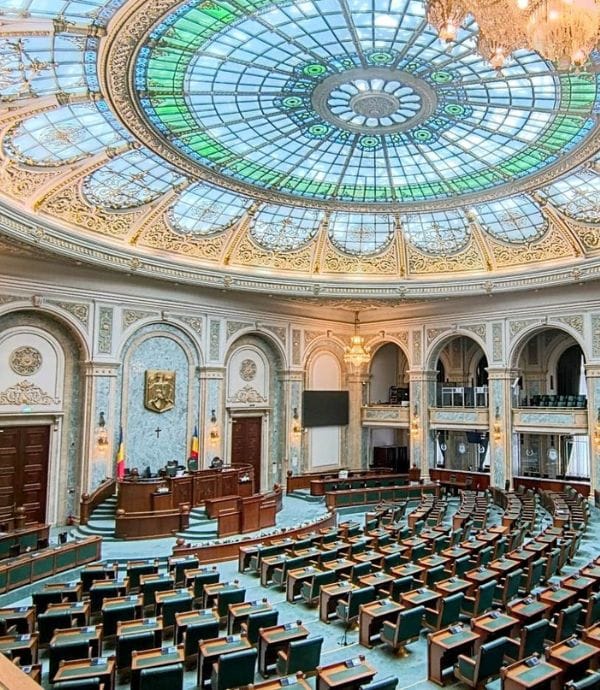
Parliament Palace
Constitution Square
Romanian Athenaeum: Bucharest’s Most Beautiful Room
Built in 1888 by public subscription, this neoclassical concert hall remains the cultural soul of the city.
2026 Insider Tip: The George Enescu Philharmonic performs here throughout the season. If your dates align, we can arrange tickets and incorporate an evening at the Athenaeum into your Bucharest itinerary — an experience most visitors simply walk past from the outside.
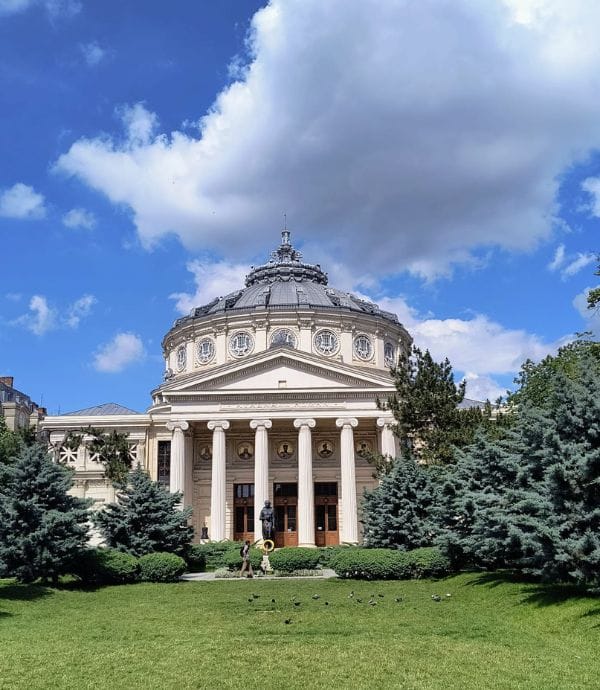
Romanian Athenaeum
George Enescu Square
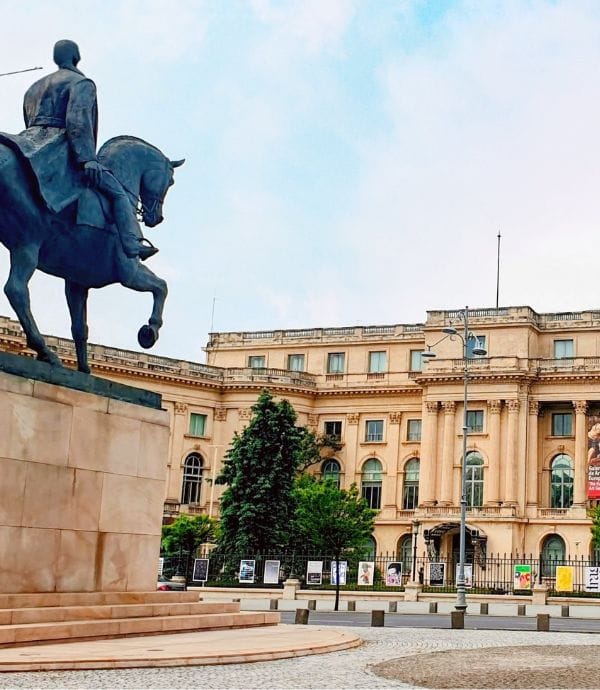
Royal Palace
Calea Victoriei
Royal Palace: Where Kings Collected and History Intervened
The former royal residence on Revolution Square, now home to the National Museum of Art and its extraordinary collection.
2026 Insider Tip: Most visitors pass through the square without stepping inside. The museum houses Romania’s most important collection of medieval and European art — including works few outside the country know exist. We build in the time to do it properly.
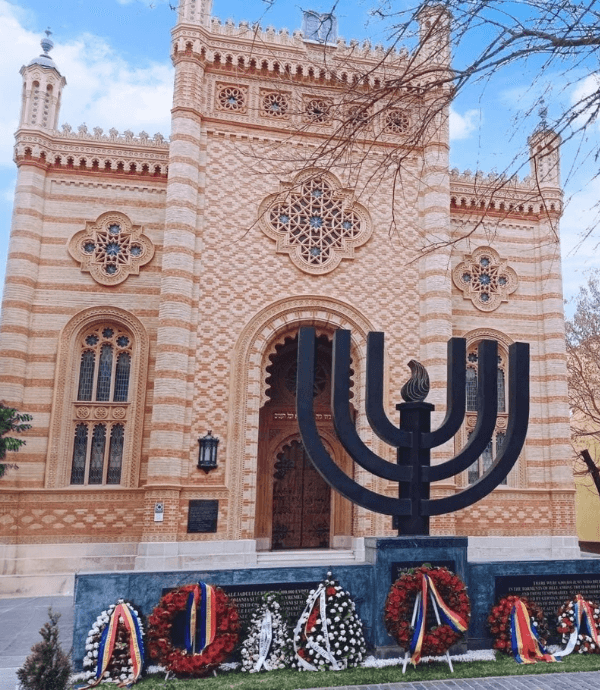
Choral Temple
Jewish Quarter
Choral Temple The Grand Synagogue of a Vanished World
Inaugurated in 1857 in a striking Moorish-Gothic style, the Choral Temple is the spiritual centerpiece of what was once one of Europe’s largest Jewish communities.
2026 Insider Tip: The interior — with its soaring painted vault and original 19th-century details — is undergoing careful restoration and remains open to small private groups. This is not a stop that appears on most Bucharest itineraries, which is exactly why it should be on yours.
Cotroceni Palace: The Royal Residence the City Forgot
An active presidential palace with a museum wing that tells the story of Romanian royalty with rare intimacy and almost no crowds.
2026 Insider Tip: Cotroceni requires advance booking and is off the radar for most independent travelers — which is precisely what makes it exceptional. We handle all access logistics, and the contrast with the Parliament’s communist monumentality makes these two palaces the most compelling back-to-back in Bucharest.
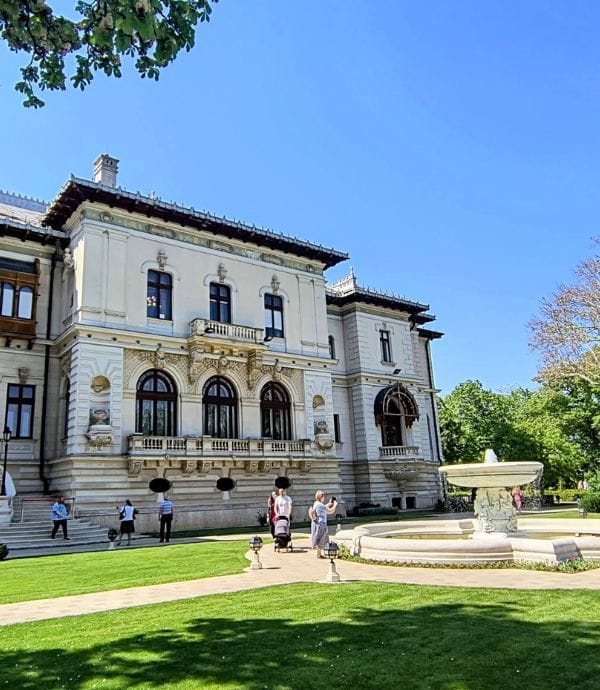
Presidential Palace
Cotroceni
Stavropoleos Church A Byzantine Jewel in Plain Sight
Dating from 1724 and tucked behind a bar on Covaci Street, this is the most beautiful small church in Bucharest — and among the least visited.
2026 Insider Tip: The inner courtyard alone is worth the detour — a quiet cloister of carved stone arches that feels entirely removed from the Old Town noise twenty meters away. Knowing it’s there is the difference between a guide and a map.
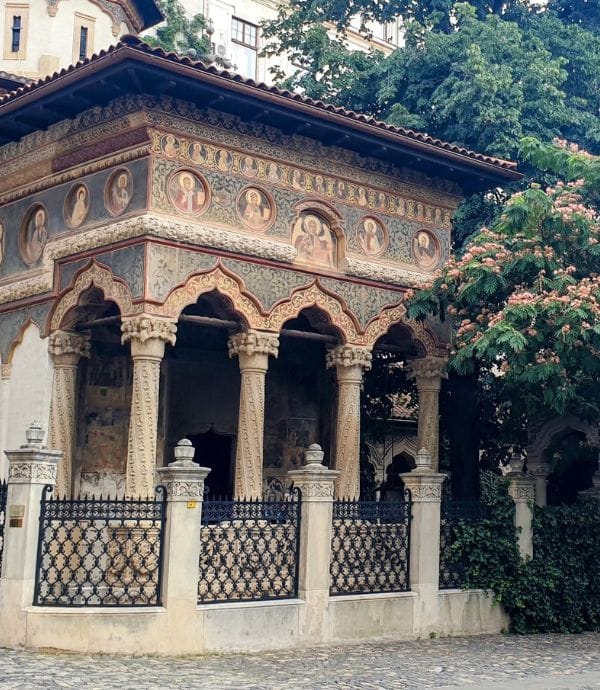
Stavropoleos Church
Old Town
Must-See Landmarks in Bucharest
Which one of these places is already on your Bucharest Private Tour bucket list?
Palace of Parliament The Weight of an Empire of One
The second largest administrative building on earth, built on the bones of an entire neighborhood.
2026 Insider Tip: Public entry covers a fraction of the 1,100 rooms. On a private tour we access restricted wings and lesser-known vantage points — and more importantly, we give the building the political and human context that makes it genuinely comprehensible rather than just overwhelmingly large.
Parliament Palace
Constitution Square
Romanian Athenaeum Bucharest’s Most Beautiful Room
Built in 1888 by public subscription, this neoclassical concert hall remains the cultural soul of the city.
2026 Insider Tip: The George Enescu Philharmonic performs here throughout the season. If your dates align, we can arrange tickets and incorporate an evening at the Athenaeum into your Bucharest itinerary — an experience most visitors simply walk past from the outside.
Romanian Athaeneum
George Enescu Square
Royal Palace: Where Kings Collected and History Intervened
The former royal residence on Revolution Square, now home to the National Museum of Art and its extraordinary collection.
2026 Insider Tip: Most visitors pass through the square without stepping inside. The museum houses Romania’s most important collection of medieval and European art — including works few outside the country know exist. We build in the time to do it properly.
Royal Palace
Calea Victoriei
Choral Temple: The Grand Synagogue of a Vanished World
Inaugurated in 1857 in a striking Moorish-Gothic style, the Choral Temple is the spiritual centerpiece of what was once one of Europe’s largest Jewish communities.
2026 Insider Tip: The interior — with its soaring painted vault and original 19th-century details — is undergoing careful restoration and remains open to small private groups. This is not a stop that appears on most Bucharest itineraries, which is exactly why it should be on yours.
Choral Temple
Jewish Quarter
Cotroceni Palace: The Royal Residence the City Forgot
An active presidential palace with a museum wing that tells the story of Romanian royalty with rare intimacy and almost no crowds.
2026 Insider Tip: Cotroceni requires advance booking and is off the radar for most independent travelers — which is precisely what makes it exceptional. We handle all access logistics, and the contrast with the Parliament’s communist monumentality makes these two palaces the most compelling back-to-back in Bucharest.
Presidential Palace
Cotroceni
Stavropoleos Church: A Byzantine Jewel in Plain Sight
Dating from 1724 and tucked behind a bar on Covaci Street, this is the most beautiful small church in Bucharest — and among the least visited.
2026 Insider Tip: The inner courtyard alone is worth the detour — a quiet cloister of carved stone arches that feels entirely removed from the Old Town noise twenty meters away. Knowing it’s there is the difference between a guide and a map.
Stavropoleos Church
Old Town
Things to do in Bucharest
Gastronomy in the Little Paris
Bucharest eats well. From slow-cooked village recipes to a craft beer scene that would surprise most Western Europeans, the city’s food culture is one of its least expected pleasures.
Traditional Dishes
Three plates worth knowing before you arrive. Ciorbă — Romania’s defining sour soup, whether de burtă (tripe, richer than it sounds) or de fasole (smoked bean, deeply comforting). Sarmale — spiced pork wrapped in fermented cabbage leaves, slow-cooked and best eaten in winter. Papanași — fried doughnuts with sour cream and cherry jam, the dessert that ends most traditional meals and converts most skeptics.
Restaurants
Caru’ cu Bere is unmissable as a building — the 1879 Neo-Gothic interior is one of the most beautiful dining rooms in Romania. For the experience to match the setting, we prefer Hanu lui Manuc, Bucharest’s oldest inn, still serving with genuine character. Jaristea does traditional Romanian cuisine without the tourist theatre. Zexe takes the same ingredients and elevates them — the best argument that Romanian food belongs in a wider European conversation.
Street Food
The real Bucharest eats on its feet. Covrigi — sesame-seed pretzels pulled hot from street ovens — are the city’s most democratic snack. Merdenea cu brânză is a flaky cheese pastry found at every bakery worth its salt. Mici — grilled skinless sausages served with mustard — belong at a summer terrace. And gogoși, Romania’s answer to the doughnut, are best eaten warm from a street stall with no particular plan for the afternoon.
Drinks
Wine: Romania produces far better wine than most visitors expect. Look for Fetească Neagră — a full-bodied indigenous red — and Sârbă, a crisp white that pairs well with almost everything on this list. Beer: The craft scene has matured quickly. Zagănu is the name to know — a Romanian microbrewery with genuine character and wide availability across the city. Coffee: Bucharest’s café culture is serious and unpretentious. The city’s independent coffee shops rival anything in Vienna or Warsaw, and a slow morning coffee is one of the best ways to read the rhythm of a neighbourhood.
Local Markets
Piața Obor is the real thing — Bucharest’s oldest and largest traditional market, loud, colourful, and entirely unpolished for tourists. Seasonal produce, local cheese, pickles, dried mushrooms, and the kind of informal commerce that no supermarket has managed to replace. Go in the morning.
2026 Insider Tip: “We recently added private market visits to Piața Obor alongside a local food guide. First, you will taste your way through seasonal produce, artisan cheese, and house-cured meats. Afterward, we sit down for a traditional lunch at a neighborhood restaurant that locals actually use.”
Best for: Food & culture travelers, authentic Bucharest experiences, urban culinary tourism in Romania.
The History & Heritage of Bucharest
No European capital carries its history more visibly than Bucharest. Walk three blocks in any direction and you move between centuries — sometimes between ideologies. This is a city where the past is not behind glass.
Little Paris & the Belle Époque
Between 1860 and the 1930s, Bucharest underwent one of the most ambitious urban transformations in Eastern Europe. Romanian architects trained at the École des Beaux-Arts in Paris returned home and rebuilt the city in their image — wide boulevards, neoclassical palaces, ornate facades, covered passages. The nickname “Micul Paris” — Little Paris — was not flattery. It was an accurate description of a city that had consciously remade itself in the image of the French capital.
Nowadays, much of that Bucharest survived the 20th century only partially. World War II bombing, a devastating earthquake in 1977, and Ceaușescu’s systematic demolition of the historic centre in the 1980s erased whole neighbourhoods. What remains is more precious for it — the CEC Palace, the Cantacuzino Palace, the Macca-Vilacrosse Passage, the elegant residential streets of Cotroceni. Walking these with a local guide is less a sightseeing exercise than an act of historical recovery.
Jewish Bucharest
At the turn of the 20th century, Bucharest was home to over 100,000 Jewish residents — more than 10% of the city’s total population. Sephardic Jews had been settling here since the 16th century; Ashkenazi communities followed from Poland and Ukraine. By 1900 there were 70 temples and synagogues across the city.
Today fewer than 2,000 remain. The old Jewish quarter near Union Square was largely erased by Ceaușescu’s Civic Centre project — streets that once resonated with daily Jewish life now lie beneath communist-era concrete. What survived is concentrated and significant. For instance, the recently restored Choral Temple stands out as one of the most beautiful synagogues in Europe. Additionally, the Great Synagogue now serves as a powerful Holocaust museum. Nearby, you will find the Jewish State Theater. Here, actors still learn Yiddish to perform classic works in their original language. For North American visitors with any connection to this history — and many discover they have more than they expected — this is often the most affecting part of any Bucharest itinerary.
Communism & the Revolution of 1989
Romania’s communist period lasted 42 years. For 24 of those, Nicolae Ceaușescu ruled with a combination of nationalist ambition, paranoid control, and an obsessive vision for reshaping Bucharest in his own image. The Palace of Parliament — the world’s second largest building — was the centrepiece of that vision. To build it, he demolished 6 square kilometres of the historic city centre, displacing 40,000 residents and erasing churches, synagogues, and entire neighbourhoods overnight.
On 21 December 1989, the regime collapsed in Revolution Square in the space of a single afternoon. The balcony from which Ceaușescu gave his final speech still stands. So does the bullet-scarred building behind it. The 1989 revolution was the most violent in Eastern Europe — nearly 1,200 people lost their lives — and the square carries that weight quietly but unmistakably. No monument fully explains it. A local guide who grew up in this city, in this period, explains it in a way that no monument can.
2026 Insider Tip: “Do you have a deeper interest in this period? If so, we can easily add a private visit to Primăverii Palace to your communist city tour. This opulent villa served as Ceaușescu’s personal residence. Consequently, you will witness the stark contrast between the dictator’s private luxury and the severe austerity his people endured. Ultimately, this remains one of the most striking moments on any Bucharest itinerary.”
Best for: History travelers, Jewish heritage tourism, communist-era history, architecture enthusiasts, culturally curious travelers from the US and Canada.
Artsy Bucharest
Bucharest does not announce its cultural life loudly. But beneath the communist monuments and the café terraces, the city holds one of the most layered artistic traditions in Eastern Europe — folk mastery, Belle Époque painting, modernist sculpture, and a classical music legacy that belongs in the same conversation as Vienna or Prague.
Folk Art — Vila Minovici
On the northern edge of the city, tucked beside Herăstrău Park, stands one of Bucharest’s most rewarding museums. Specifically, Vila Minovici was built in 1905 by Nicolae Minovici. He was a forensic scientist, social reformer, and passionate collector of Romanian folk art. Consequently, he designed the property as both a personal residence and a showcase for traditional craftsmanship. As a result, the interior is extraordinary. The entire Neo-Romanian style villa is filled with hand-carved furniture and painted ceramics. Additionally, you will find embroidered textiles and decorative objects from every region. Ultimately, it is the most intimate folk art collection in Bucharest, and the building itself is a masterpiece. Best of all, almost no group tours come here, which is precisely the point.
Romanian Masters — Grigorescu & Aman
Nicolae Grigorescu began his career painting church frescoes in rural monasteries — a training that gave him a sensitivity to light and surface that no academy could have taught. He later turned his attention to the Romanian peasantry, producing canvases of ox carts, shepherds, and village women that remain the most beloved images in Romanian art. His work is not sentimental; it is observational, and it holds up. You’ll find his paintings at the National Art Museum on Revolution Square.
A short walk away, on Rosetti Street, stands the Theodor Aman Museum — the former home and studio of Romania’s first modern painter, preserved almost exactly as he left it in 1891. Aman trained in Paris, returned to Bucharest, and spent his life trying to build a visual culture in a country that didn’t yet have one. The house is small, personal, and completely off the tourist circuit. Two stops, ten minutes apart, and two centuries of Romanian painting in context.
Sculpture & Brâncuși — 2026
Constantin Brâncuși was born in a small village in Oltenia in 1876, walked to Paris at the age of 28, and went on to become one of the most influential sculptors of the 20th century. His work — the Endless Column, the Bird in Space, the Kiss — stripped form down to its essential truth in a way that no sculptor before him had managed. He never forgot where he came from. The rural Romanian forms of his childhood are visible in everything he made.
2026 marks the 150th anniversary of his birth, and Romania is commemorating the year nationally across museums, exhibitions, and cultural events. For anyone with an interest in modern art, visiting Bucharest in 2026 carries a particular resonance — this is the year the country reclaims one of its greatest sons.
Contemporary Art — MNAC
The National Museum of Contemporary Art occupies the western wing of the Palace of Parliament. That sentence alone tells you something about Romania. Ceaușescu’s most totalitarian monument now houses the country’s most avant-garde art collection — video installations, experimental photography, post-communist conceptual work, and one of the most significant contemporary collections in Southeast Europe. The irony is not lost on anyone who works there. The views from the upper floors over the Civic Centre are extraordinary and unsettling in equal measure. This is not a museum you stumble upon. It is one you seek out — and it rewards the effort.
Music — George Enescu
George Enescu composed his Romanian Rhapsody No. 1 in 1901, at the age of nineteen. It remains the most performed piece of Romanian music in the world — a seven-minute torrent of folk melody, rhythmic energy, and sheer joy that has never stopped sounding like the place it came from. Enescu went on to become one of the 20th century’s great violinists, conductors, and composers, moving between Bucharest and Paris without ever fully belonging to either. His face is on the Romanian 5 leu banknote. His name is on the country’s greatest concert hall.
The George Enescu International Festival — held every two years in Bucharest — is one of the finest classical music events in Europe, drawing leading orchestras and soloists to the Romanian Athenaeum and venues across the city. The next edition is in 2027. If your travel dates align, we arrange tickets and build it into your itinerary. If they don’t, an evening at the Athenaeum during the regular season is reason enough on its own.
2026 Insider Tip: “We can arrange tickets to the George Enescu Philharmonic at the Romanian Athenaeum. Indeed, this spectacular venue is one of Europe’s most beautiful concert halls. Afterward, we seamlessly incorporate the evening performance into your itinerary. As a result, you will experience a deeply cultural night that most visitors only admire from the outside.”
Best for: Art and culture travelers, classical music lovers, architecture enthusiasts, visitors with an interest in modern and folk art traditions.
Outdoors & Wellness in Bucharest
Parks & Green Spaces
Herăstrău — King Michael I Park is the city’s largest and most beloved green space — 187 hectares of parkland wrapped around a lake in the north of the city, constructed in the 1930s under royal patronage. Romanians walk here, row here, have coffee here at lakeside terraces, and bring their children on weekends. It is the most democratic space in Bucharest — everyone uses it, regardless of neighbourhood or income. The Village Museum sits along its northern shore, making a combined morning visit one of the most satisfying half-days the city offers.
A short distance south, Cișmigiu Gardens is Bucharest’s oldest public park — laid out in 1847 by a Viennese landscape architect on the site of a former marsh. More intimate than Herăstrău, more urban, more literary. Chess players claim the tables near the central lake every morning. The café terrace has been here in various forms for over a century. In autumn particularly, when the chestnuts turn and the light softens, Cișmigiu is one of the most quietly beautiful spaces in the city.
The Botanical Garden, near Cotroceni, covers 17 hectares and houses over 10,000 plant species. It is one of Bucharest’s most undervisited spaces — which in a city with legitimate crowds at its headline attractions, is a genuine recommendation in itself.
Văcărești Nature Park
In the 1980s, Ceaușescu ordered the construction of a vast reservoir in the south of Bucharest. The project was abandoned after 1989, half-finished and largely forgotten. Nature moved in. Over three decades, reed beds, wetlands, and woodland colonised the empty basin — and Bucharest found itself with an urban delta unlike anything else in Europe. Văcărești was officially declared a nature park in 2016, covering 183 hectares within the city limits. It is home to over 100 bird species, foxes, turtles, and wildflowers that have no business being this close to a capital city. The best time to visit is late spring through early autumn. It is, in the most literal sense, something that should not exist — and that is exactly what makes it worth your time.
Wellness
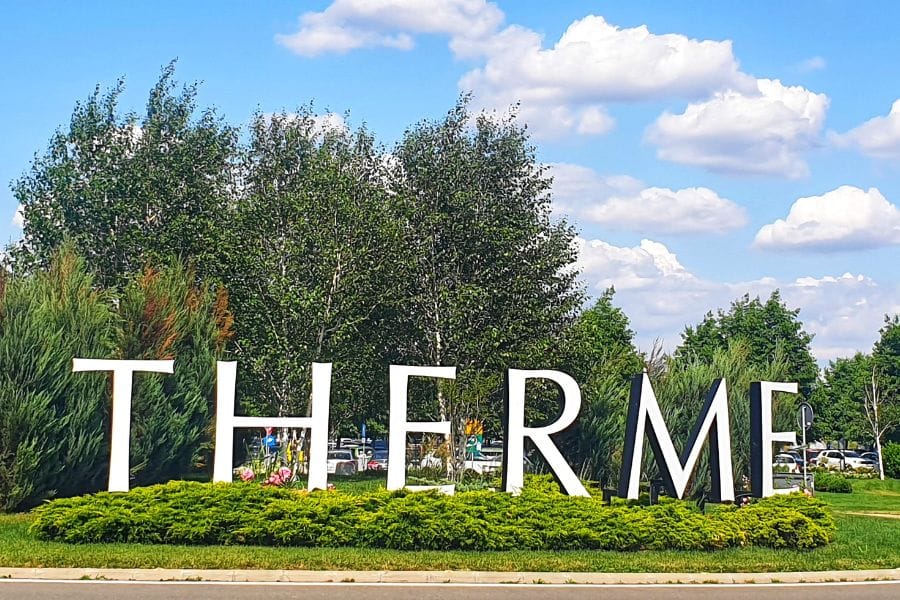
Therme Bucharest, located just north of the city, is the largest thermal and wellness centre in Europe — a vast complex of thermal pools, waterslides, tropical gardens, and spa facilities housed under a glass roof the size of several football fields. It is enormously popular with both locals and visitors, and deservedly so. For families, it is an easy half-day. For couples or solo travelers wanting a full recovery day between sightseeing, it is genuinely restorative. The concept is familiar to North American visitors — but the scale and quality consistently exceed expectations.
For those preferring something more urban and refined, Bucharest’s five-star hotel spa circuit — anchored by properties in the Floreasca and Dorobanți areas — offers treatments, pools, and wellness facilities without leaving the city. A quieter, more intimate alternative for guests who want wellness woven into their stay rather than as a standalone excursion.
2026 Insider Tip: “Do you want to start your morning exactly like a Bucharest local? If so, we can arrange an early walk along the lake in Herăstrău Park. Afterward, you will enjoy breakfast at a peaceful lakeside terrace before the city wakes up. Ultimately, this creates a simple, unhurried experience that group tours never offer.”
Best for: Families, nature lovers, wellness travelers, slow travel enthusiasts, visitors wanting to experience Bucharest beyond its monuments.
Bucharest for kids
Traveling to Eastern Europe with children can feel like an unknown quantity — particularly for North American families used to destinations that visibly cater to younger visitors. Bucharest is more family-friendly than its reputation suggests. The city is safe, portions of it are very walkable, and there is a genuine and growing ecosystem of attractions built specifically for children that most travel guides never mention.
Kids Fun Activities in Bucharest
If you want hands-on learning, the Grigore Antipa Natural History Museum is a fantastic starting point. In fact, this recently renovated space ranks among the finest in Eastern Europe. Additionally, Casa Experimentelor offers a non-profit science center with over 100 interactive experiments. Here, curious minds stay genuinely occupied with Tesla coils and plasma globes. Are you seeking something more playful? Velonova Mirage provides 15 rooms of optical illusions and 3D art that easily impress adults too. Similarly, the Museum of Senses takes a comparable approach by offering over 50 interactive installations. Meanwhile, younger children will absolutely love Reptiland. This live reptile museum showcases snakes and tropical ecosystems inside automated terrariums. Consequently, it often becomes the unexpected highlight of the trip. Finally, you might prefer a classic outdoor afternoon. In that case, Orășelul Copiilor delivers traditional rides, carousels, and open-air play that kids universally understand.
And when the itinerary calls for a full family reset, Therme Bucharest — Europe’s largest thermal and wellness complex — is the answer for all ages simultaneously.
2026 Insider Tip: “Traveling with children does not mean sacrificing a great Bucharest experience. Instead, it simply requires a different approach to planning. Therefore, we design dedicated family half-days tailored perfectly to your itinerary. First, we match the attractions specifically to your children’s ages. Finally, we add enough flexibility to keep everyone—adults included—genuinely engaged.”
Best for: Families with children of all ages, expats, short-stay visitors, parents traveling with younger children on mixed itineraries.
Our Bucharest Private Tours

Bucharest Past and Present Walking Tour
2.5 to 3 hours
Focus: History, Architecture, Local Life, Things to Do
Available in: EN | FR | IT read more…
Available in: EN | FR | IT read more…

Bucharest’s Most Popular | Village Museum
4 hours
Focus: Peasant Traditions, History, Architecture
Available in: EN | FR | IT read more…
Available in: EN | FR | IT read more…

Bucharest Jewish Heritage | Holocaust Memorial
3.5 to 4 hours
Focus: Jewish Heritage and History, Holocaust in Romania
Available in: EN | FR | IT read more…
Available in: EN | FR | IT read more…

Communism Investigation Tour
4 to 5 hours
Focus: Life during Communism, Romanian Revolution, Cold War Period
Available in: EN | FR | IT read more…
Available in: EN | FR | IT read more…